
 By Spencer Gallagher
A good home gym workout mat does more than cushion your knees. It protects your floor, keeps weights from rattling through the room, and gives you a stable, non-slip surface for everything from push-ups to jump rope. Choosing the right one depends on how much space you have, what kind of training you do, and how much cushioning you need. This guide compares five popular options on the criteria that matter most: thickness, coverage, material, ease of setup and how well each suits different workouts. Each pick is based on manufacturer specifications, brand reputation and common patterns in owner feedback, not on hands-on testing.
Our Top Picks
Quick Comparison
| Product | Best for | Key feature |
|---|---|---|
| ProsourceFit Exercise Puzzle Mat, 1/2 in, 48 sq ft, 12 Tiles, Black | Covering a full room with interlocking tiles | Interlocking foam tiles in a 48 sq ft set |
| CAP Barbell Folding Exercise Mat | Stretching, core work and floor exercises | Folds for storage, 2 inches thick |
| 12 Pack 48 sqft Home Gym Mat, Puzzle Exercise Mat | Budget-minded buyers who want full coverage | 12 interlocking tiles, 1/2 inch thick |
| GymCope Large Exercise Mat for Home Workouts | Heavy training, jump rope and high-impact cardio | 7mm extra-thick, high-density foam |
| 4x6ft Gym Floor Mat 10mm Thick | Garage gyms and hard concrete floors | 10mm thick, TPE/NPE foam, non-slip surface |
ProsourceFit Exercise Puzzle Mat, 1/2 in, 48 sq ft, 12 Tiles, Black
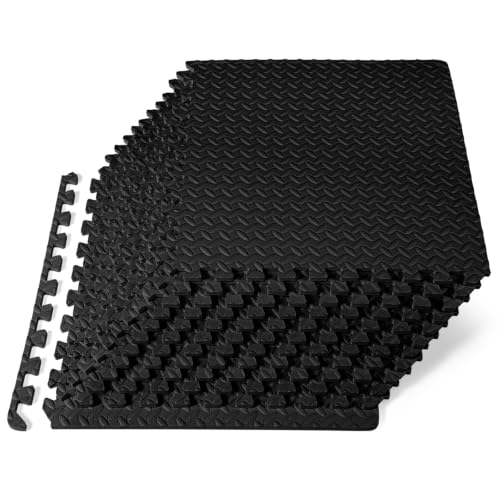
ProsourceFit Exercise Puzzle Mat, 1/2 in, 48 sq ft, 12 Tiles, Black
This set suits people who want to cover a large area, such as a spare bedroom or basement, and who like the flexibility of building the floor one tile at a time. Because the tiles lock together, you can leave gaps out of the layout or shrink the footprint when you need to.
Key specs
- Thickness: 1/2 inch
- Coverage: 48 square feet
- Tiles: 12 interlocking pieces
- Color: Black
Pros
- Covers a large floor area without a single heavy roll to move
- Tiles can be rearranged or removed as your space changes
- Half-inch thickness gives solid cushioning for most floor work
Cons
- Seams between tiles can catch small weights or wheels
- Half an inch is less cushioned than thicker mats for heavy jumping
CAP Barbell Folding Exercise Mat – Durable, Anti-Tear, Thick Padding for Fitness, Aerobics, Gymnastics & Home Workouts

CAP Barbell Folding Exercise Mat – Durable, Anti-Tear, Thick Padding for Fitness, Aerobics, Gymnastics & Home Workouts. 72"L x 24"W x 2"Thick. BLACK
This is a good match for people with a limited floor area who still want a full-length mat for stretching, sit-ups and bodyweight work. The fold-in-half design makes it easy to store behind a door or in a closet after each session.
Key specs
- Dimensions: 72 inches long by 24 inches wide
- Thickness: 2 inches
- Color: Black
- Folding design for storage
Pros
- Two-inch padding is comfortable for floor exercises and core work
- Folds up for storage in small apartments
- Full-length size works well for lying and stretching movements
Cons
- Folded creases can take some time to flatten out
- Narrow width leaves little room for wide movements like burpees
12 Pack 48 sqft Home Gym Mat, Puzzle Exercise Mat, EVA Interlocking Foam Floor Tiles

12 Pack 48 sqft Home Gym Mat, Puzzle Exercise Mat, EVA Interlocking Foam Floor Tiles for Home Workout Equipment Black, 24 in x 24 in x ½ in – 12 Tiles (Black, 12 Pack, 48 SQ FT)
This interlocking set suits buyers who want to cover a similar 48 square feet as the ProsourceFit set but prefer a value-focused option. The 24-inch square tiles make it simple to customize the layout around equipment.
Key specs
- Tile size: 24 inches by 24 inches
- Thickness: 1/2 inch
- Coverage: 48 square feet across 12 tiles
- Material: EVA foam
Pros
- Large tiles mean fewer seams than smaller interlocking sets
- Easy to set up without tools
- Good for building a clean floor under a treadmill or bike
Cons
- EVA foam can compress over time under heavy, concentrated loads
- Edges may not lock as tightly as some premium puzzle mats
GymCope Large Exercise Mat for Home Workouts

GymCope Large Exercise Mat for Home Workouts, 12×6/10×6/9×6/8×6/7×5/6×4 ft | (7mm) Extra Thick Workout Mat, High-Density Gym Mat for Cardio, Jump Rope, MMA, Weights (Shoe-Friendly)
This roll-out mat fits people who lift, jump rope or do high-impact cardio and want extra cushioning under their feet and knees. Its size options let you match the mat to your room or garage floor.
Key specs
- Thickness: 7mm high-density foam
- Size options listed in the product name, including 12×6 and 10×6 feet
- Shoe-friendly surface, according to the listing
Pros
- High-density foam resists compression better than softer foam
- Large size options cover most home gym layouts
- Works well for jump rope and dynamic cardio
Cons
- Large rolls are heavy and awkward to move alone
- Thinner than the 10mm option for heavy plyometrics
4x6ft Gym Floor Mat 10mm Thick – Large TPE/NPE Foam Workout Mat for Home Gym, Garage Floor

4x6ft Gym Floor Mat 10mm Thick – Large TPE/NPE Foam Workout Mat for Home Gym, Garage Floor, Yoga & Exercise – Non-Slip Eco-Friendly Fitness Mat (Black)
This option works well in garages and basements with hard concrete floors, where extra thickness and a non-slip surface help protect joints and keep the mat from sliding during lifts.
Key specs
- Size: 4 feet by 6 feet
- Thickness: 10mm
- Material: TPE/NPE foam
- Color: Black
Pros
- 10mm thickness adds noticeable cushioning on hard floors
- Non-slip surface helps during standing and lifting work
- Compact enough for a single bay in a garage
Cons
- Smaller footprint may not cover a full workout area
- Some owners report a rubbery odor when first unpacked
Buying Guide
Before you buy, think about the workouts you do most, the floor under your mat, and where you plan to store it. A mat that works for yoga may not hold up under dumbbells, and a thick roll may be overkill for a small apartment.
Selection Criteria
- Thickness: 1/2 inch is typical for floor work and stretching. 7mm to 10mm suits jumping and heavier training. Two inches is more of a padded floor for core work and floor exercises.
- Coverage: Measure the area you plan to use, including space for swinging arms and rolling on the floor.
- Surface: Look for a textured or non-slip top, especially if you use weights.
- Density: Higher-density foam holds its shape better under heavy equipment.
Important Features
- Interlocking tiles are easy to expand and reconfigure.
- Rolled mats offer a seamless surface with fewer gaps.
- Folding mats save space but may leave creases.
- Edge borders help keep tiles aligned during movement.
Specs to Check
- Stated thickness in inches or millimeters
- Total dimensions or square footage
- Material type, such as EVA, TPE or NPE foam
- Weight capacity or load guidance, if the manufacturer provides it
Choosing by Need
- Full room coverage: Interlocking puzzle tiles give the most flexibility.
- Small space: A folding or narrow mat stores more easily.
- Heavy lifting or jumping: Choose a thicker, high-density mat.
- Garage or concrete floor: Prioritize thickness and a non-slip surface.
Things to Watch Out For
- Off-gassing smells are common with new foam. Air the mat out before heavy use.
- Thin mats do little to protect joints on hard floors during jumping.
- Puzzle tile seams can catch wheels and small weights.
- Check the manufacturer’s guidance on floor protection if you use heavy equipment.
If you have joint problems or a medical condition, check with a doctor or physical therapist before choosing a surface for high-impact training.
For more ideas on setting up your training space, see Best Exercise Mats for Home Workouts and Best Kettlebells for Home Workouts. If you plan to add cardio equipment later, 7 Best Cardio Workout Machines for Home Use in 2026 is a useful next step.
FAQ
How thick should a home gym workout mat be?
For stretching, yoga and bodyweight floor work, 1/2 inch is usually enough. For jumping, jump rope or dropping weights, 7mm to 10mm offers more cushioning. Two inches is best for padded core work or floor exercises that involve a lot of lying down.
Can I use a workout mat on a concrete garage floor?
Yes, and it is a common use. A thicker mat with a non-slip surface is the best choice on concrete, since it adds cushioning and helps prevent sliding during lifts.
Do interlocking puzzle mats stay in place?
Most interlocking tiles stay in place during normal use, but seams can shift under heavy weights or fast movement. Some people add a rubber mat or floor adhesive for extra security, though check the manufacturer’s guidance first.
How do I clean a home gym mat?
Wipe the surface with a damp cloth and mild soap, then let it air dry. Avoid harsh chemicals unless the manufacturer allows them, since they can break down foam or vinyl.
Is foam or rubber better for a gym floor?
Foam is lighter and more comfortable for everyday workouts. Rubber is denser and handles heavy weights better but is much heavier. Your training style should guide the choice.
Will a workout mat stop floor noise?
A thick mat can reduce some impact noise, especially from jumping, but it will not block all sound. Thicker materials and denser foam generally perform better for this.
Conclusion
For most home gyms, a 1/2-inch puzzle mat offers the best balance of coverage and flexibility. The ProsourceFit and 12 Pack interlocking sets suit people who want to cover a full room. The CAP Barbell folding mat is a practical pick for small spaces and floor work. For jumping and high-impact cardio, the GymCope roll-out mat gives more cushioning. And for garages and concrete floors, the 10mm TPE/NPE mat provides the extra thickness and grip most people need. Match the thickness, size and surface to your workouts, and your mat will do its job for years.
Related reading

About Spencer Gallagher
Spencer has been writing about beginner fitness & weight-loss exercise for this site, with an eye on clear explanations, honest trade-offs and options for different needs and budgets.





