
 By Audrey Hayes
Updated November 2026
Starting a women’s bodybuilding beginner workout can feel confusing, especially when every program promises fast results. The right guide gives you clear exercise instructions, sensible progression and a schedule you can actually follow. This list compares five popular strength training books and visual guides aimed at women new to lifting. We judged each one on how clearly it explains form, whether it fits a home or gym setup, how structured the programming is, and how often owners describe it as easy to follow. None of these picks are a substitute for personal coaching, so if you have an injury or medical condition, check with a doctor or certified trainer first.
Our top picks at a glance
- 1
 TOP CHOICEBest overallDelavier's Women's Strength Training Anatomy WorkoutsView on Amazon
- 2
 TOP CHOICEBest for home dumbbell trainingWomen's Health The Woman's Guide To Strength Training: DumbbellsView on Amazon
- 3
 TOP CHOICEBest visual reference on the wallPOCAZONE Dumbbell Workout Posters, Exercise Charts & Video GuideView on Amazon
- 4
 Best for absolute beginners to liftingBeginner's Guide to Weight Lifting: Simple Exercises and Workouts to Get StrongView on Amazon
- 5
 Best no-equipment optionMILITARY CALISTHENICS WORKOUT FOR WOMEN OVER 40View on Amazon
Our Top Picks
| Product | Best for | Key feature |
|---|---|---|
| Delavier’s Women’s Strength Training Anatomy Workouts | Learning muscle names and exercise form | Anatomy illustrations paired with exercises |
| Women’s Health The Woman’s Guide To Strength Training: Dumbbells | Home training with one pair of dumbbells | Roughly 30-minute dumbbell workouts |
| POCAZONE Dumbbell Workout Posters | A visual routine reference in a home gym | Laminated 11×17 charts with QR code videos |
| Beginner’s Guide to Weight Lifting | Complete newcomers to barbells and machines | Step-by-step basics for building a first routine |
| Military Calisthenics Workout for Women Over 40 | Training with no equipment at all | 28-day bodyweight challenge in 15-minute sessions |
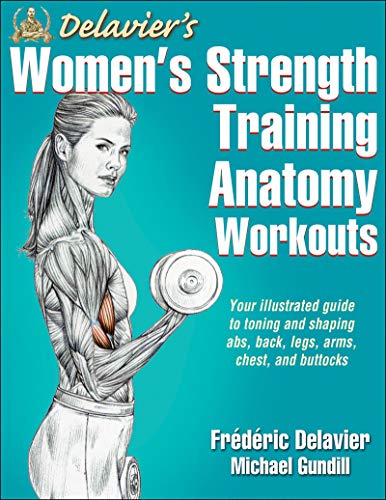
Delavier’s Women’s Strength Training Anatomy Workouts
Delavier's Women's Strength Training Anatomy Workouts
Best for: Learning proper form and understanding which muscles each exercise works.
This is a good fit for women who want to know why an exercise works, not just how many reps to do. It suits readers who prefer a reference they can open between sessions.
Key specs:
- Format: illustrated strength training book
- Focus: anatomy-based exercise guidance for women
- Designed for use in a gym or at home with basic equipment
Pros:
- Anatomy illustrations make muscle targets easy to picture
- Exercises are organized by muscle group for quick lookup
- Useful reference for building your own routine later
Cons:
- Less structured as a week-by-week program
- Advanced readers may find some sections basic
Bottom line: Best for beginners who want to understand their body and build form knowledge before committing to a strict schedule.
View on AmazonWomen’s Health The Woman’s Guide To Strength Training: Dumbbells
Women's Health The Woman's Guide To Strength Training: Dumbbells: Get strong arms, legs, and abs—with around 30-minute workouts you can do in your own home!
Best for: Home training with a single pair of dumbbells.
This suits women who want to train at home on a budget of equipment and time. The title promises workouts of around 30 minutes, which makes it practical for busy schedules.
Key specs:
- Format: dumbbell-focused strength training guide
- Workouts described as around 30 minutes each
- Targets arms, legs and abs
Pros:
- Requires only dumbbells, so it fits a small home space
- Session length is realistic for beginners
- Covers the whole body rather than one area
Cons:
- You need your own dumbbells to get full use of it
- Limited guidance on heavier, advanced progression
Bottom line: A strong choice for beginners who plan to train at home with dumbbells and want short, manageable sessions.
View on AmazonPOCAZONE Dumbbell Workout Posters, Exercise Charts & Video Guide
Laminated 11×17, Build a Clear Home Gym Routine, Weight Lifting with QR Code Video, Free Weight Body Building Guide Dumbbell Workout Posters, Exercise Charts & Video Guide
Best for: A visual routine reference you can post in your home gym.
Readers who learn best by seeing a chart on the wall, rather than reading pages, may prefer this format. It is also handy for checking form mid-workout.
Key specs:
- Format: laminated posters, 11×17 inches
- Includes exercise charts and a QR code video guide
- Focused on dumbbell weight training
Pros:
- Laminated sheets hold up to sweat and chalk-free wiping
- QR codes link to demonstration videos
- Easy to see at a glance during a set
Cons:
- Not a full book, so explanations are brief
- Requires wall space and a few minutes to set up
Bottom line: Best for visual learners who already own dumbbells and want a posted reference in their home gym.
View on AmazonBeginner’s Guide to Weight Lifting: Simple Exercises and Workouts to Get Strong
Beginner's Guide to Weight Lifting: Simple Exercises and Workouts to Get Strong
Best for: Complete newcomers who have never lifted weights before.
This book starts from the basics, so it suits women who feel intimidated by the gym floor. It focuses on simple movements rather than complicated routines.
Key specs:
- Format: beginner strength training guide
- Covers simple exercises and beginner workouts
- Aimed at building general strength
Pros:
- Language is accessible for people with no lifting background
- Keeps the number of exercises manageable
- Useful for building confidence on machines and free weights
Cons:
- Not written specifically for women
- May feel too basic once you have a few months of training behind you
Bottom line: A good first book for total beginners who want simple, no-nonsense instruction.
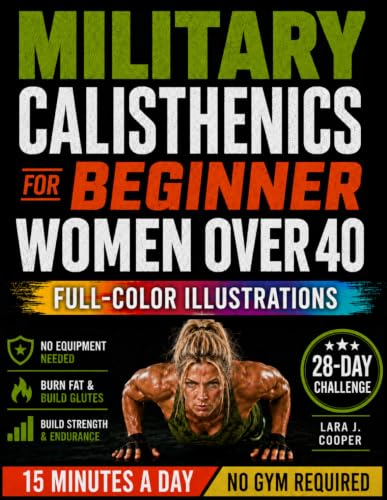
View on AmazonMILITARY CALISTHENICS WORKOUT FOR WOMEN OVER 40
MILITARY CALISTHENICS WORKOUT FOR WOMEN OVER 40: A 28-Day At-Home Bodyweight Challenge for Absolute Beginners with No-Equipment Workouts to Build a Strong, Toned, Confident Body in 15 Minutes a Day
Best for: Training with no equipment at all.
This suits women who cannot or do not want to buy weights yet. It is also a reasonable choice for readers over 40 who want a gentle, structured start with bodyweight movements.
Key specs:
- Format: 28-day at-home bodyweight challenge
- Workouts described as about 15 minutes a day
- No equipment required
Pros:
- Zero equipment cost to get started
- Short daily sessions are easy to repeat
- Clear 28-day structure gives a built-in timeline
Cons:
- Bodyweight work alone has limits for building heavier muscle
- Calisthenics focus may not match a strict bodybuilding goal
Bottom line: Best for beginners who want a structured, equipment-free start and plan to add weights later.
View on AmazonBuying Guide
Look for clear exercise instructions
A good guide explains setup, movement path and common mistakes for each exercise. Photos or illustrations help, but written cues matter more. Check a sample page before you buy if the store allows it.
Good picks for this: Delavier’s Women’s Strength Training Anatomy Workouts, Beginner’s Guide to Weight Lifting
Check the training setup you have
Decide whether you will train at home, in a gym or both. Dumbbell-based guides need weights, while bodyweight guides need only floor space. Match the book to your real setup, not the one you hope to have.
Good picks for this: Women’s Health The Woman’s Guide To Strength Training: Dumbbells, Military Calisthenics Workout for Women Over 40
Consider session length
Beginners stick with programs that fit their schedule. Look for workouts in the 20 to 40 minute range if you are starting out. Very long sessions often lead to skipped workouts.
Good picks for this: Women’s Health The Woman’s Guide To Strength Training: Dumbbells, Military Calisthenics Workout for Women Over 40
Look for progression guidance
Strength improves when you gradually add weight, reps or difficulty. A guide that explains how and when to progress will serve you longer than one that only lists exercises. Check whether it mentions adding load over weeks.
Good picks for this: Beginner’s Guide to Weight Lifting, Women’s Health The Woman’s Guide To Strength Training: Dumbbells
Use visual aids when you need them
Some people learn better from images than paragraphs. Posters and charts work well as quick references during a workout, but they do not replace full instructions. Pair them with a book if you are new.
Good picks for this: POCAZONE Dumbbell Workout Posters, Exercise Charts & Video Guide
Think about durability and handling
Books and posters get handled, sweated on and moved around a gym or home space. Laminated sheets resist wear better than paper, and a sturdy binding helps a book lie flat on the floor.
Good picks for this: POCAZONE Dumbbell Workout Posters, Exercise Charts & Video Guide
Match the guide to your goals
Bodybuilding-style training focuses on building muscle, which generally needs progressive resistance and enough weekly volume. A general beginner guide is a good starting point, while a more specialized one suits readers with a clear physique goal.
Good picks for this: Delavier’s Women’s Strength Training Anatomy Workouts, Beginner’s Guide to Weight Lifting
FAQ
Is a women’s bodybuilding beginner workout different from a regular beginner program?
The basic principles are similar: learn form, train consistently and progressively add load. Bodybuilding-style programs usually emphasize muscle size, so they tend to use moderate weights and higher total volume per muscle group.
How many days a week should a beginner train?
Many beginner programs use two to four full-body sessions per week, with rest days in between. Start at the low end if you are new and increase only if recovery feels good.
Do I need a gym to start?
No. Dumbbells or bodyweight exercises can build a solid foundation at home. A gym becomes useful later when you want heavier weights and more equipment options.
How long before I see results?
Strength gains often show within a few weeks because the nervous system adapts quickly. Visible muscle changes usually take several months of consistent training and proper nutrition.
Should I check with a doctor before starting?
Yes, especially if you have a heart condition, joint problems, pregnancy, or other health concerns. A doctor or certified trainer can help you choose a safe starting point.
Can these guides replace a personal trainer?
They can teach you the fundamentals, but they cannot correct your form in real time. If you can afford occasional coaching, a few sessions to check your technique are worthwhile.
Conclusion
For most beginners, Delavier’s Women’s Strength Training Anatomy Workouts is the most rounded starting point because it teaches form and muscle targets. If you train at home with dumbbells, the Women’s Health dumbbell guide offers short, practical sessions. The POCAZONE posters work well as a visual reference in a home gym, while the Beginner’s Guide to Weight Lifting suits people starting from zero. The military calisthenics book is the right pick if you want to begin with no equipment at all. Choose based on your setup and how much guidance you need, then stay consistent.
Sources
- Physical activity guidelines and recommended muscle-strengthening activity for adults (cdc.gov)
- Position stands and exercise guidelines for resistance training from the American College of Sports Medicine (acsm.org)
- Research summaries on strength training and muscle health (nih.gov)
Related reading
- Women's Workout Routine at Home: A 4-Week Beginner Plan
- Women's Home Workout Plan: 4 Best Picks for Beginners (2026)
- Women's Beginner Workout Schedule: A 4-Week Step-by-Step Plan
- Women's Beginner Kettlebell Workout: A Step-by-Step Home Plan
- Women's Beginner Gym Workout: 5 Best Picks for Every Need (2026)
About Audrey Hayes
Audrey Hayes is part of our editorial team and reviews and edits our beginner fitness & weight-loss exercise guides, checking product details against manufacturer specifications and owner feedback.





