By Caleb Morgan
Updated November 2026
Choosing workout flooring for home gym setups comes down to a few practical questions: how much impact the floor needs to absorb, how much noise it will block, how heavy your equipment is, and how easy it is to move or clean. This list compares five interlocking mats that all cover roughly 48 square feet and use high-density EVA foam bases, with a rubber or rubber-style top layer on most. We judged each option on thickness, coverage per box, surface grip, tile size, and the patterns owner reviews tend to mention, such as edge curling, odor, and how well the tiles lock together.
Our top picks at a glance
- 1
 TOP CHOICEBest overallSUPERJARE 0.56'' Thick Rubber Top Gym FlooringView on Amazon
- 2
 TOP CHOICEBest for heavy liftingSUPERJARE 0.79'' Extra-Thick Exercise MatsView on Amazon
- 3
 TOP CHOICEBest for small roomsAIRHOP 0.56in Thick Exercise Equipment MatsView on Amazon
- 4
 Best budget pickbemaxx Gym Mats Set EVA Interlocking TilesView on Amazon
- 5
 Best thick-tile alternativeAIRHOP 0.79in Thick Exercise Equipment MatsView on Amazon
Our Top Picks
Quick Comparison
| Product | Best for | Key feature |
|---|---|---|
| SUPERJARE 0.56” Thick Rubber Top Gym Flooring | General home gym use | 0.56-inch thickness with rubber top |
| bemaxx Gym Mats Set EVA Interlocking Tiles | Small budgets and light workouts | 18 tiles with puzzle-style edges |
| AIRHOP 0.56in Thick Exercise Equipment Mats | Small rooms | 12 large 24 x 24-inch tiles |
| AIRHOP 0.79in Thick Exercise Equipment Mats | Heavier training and added cushioning | 0.79-inch thickness with rubber top |
| SUPERJARE 0.79” Extra-Thick Exercise Mats | Heavy lifting and dropped weights | 0.79-inch extra-thick build |
SUPERJARE 0.56” Thick Rubber Top Gym Flooring
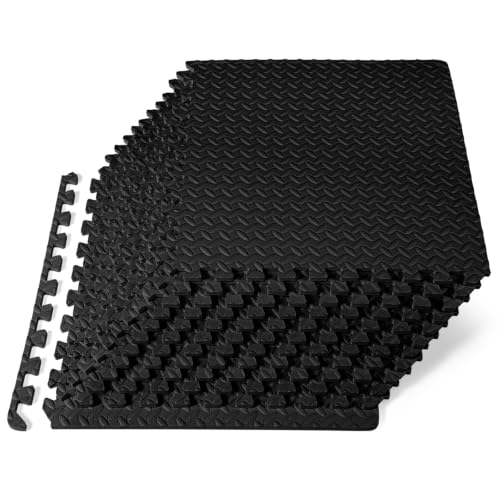
SUPERJARE 0.56'' Thick 48 Sq Ft Rubber Top Gym Flooring for Home Gym | High Density Gym mat with Upgraded Rubber Top, 12 Pcs Interlocking EVA Foam Exercise Equipment mat, Workout Mat, Black/Grey
Best for: General home gym use with a mix of cardio, bodyweight work, and light-to-moderate weights.
This is a sensible starting point for most people setting up a home gym. The 0.56-inch thickness is enough to take the edge off footfalls and dumbbell drops without making the surface unstable under treadmills or bikes.
Key specs
- Thickness: 0.56 inches
- Coverage: about 48 square feet across 12 interlocking pieces
- Construction: high-density EVA foam base with rubber top
- Color: black/grey
Pros
- Good balance of cushioning and stability
- Rubber top offers solid grip for floor work
- Covers a typical small gym corner in one purchase
Cons
- Edges can lift slightly on very hard use if not pressed together firmly
- May not fully absorb very heavy drops
Bottom line: A strong default choice for someone who wants one mat for mixed training and does not plan to drop heavy plates regularly.
View on Amazonbemaxx Gym Mats Set EVA Interlocking Tiles
bemaxx Gym Mats Set – EVA Interlocking Foam Floor Tiles Workout Mat Puzzle | 12.6"x12.6"x0.4" Gym Flooring Exercise Mats Sports Home Equipment Play-Room Yoga Garage Fitness Treadmill Pool 18 pcs 18sqf
Best for: Small budgets and light workouts such as yoga, stretching, and bodyweight routines.
This set uses smaller 12.6-inch tiles and a thinner profile, which makes it easy to lay out in an awkward space or a spare room. It is aimed at lighter activity rather than heavy strength work.
Key specs
- Tile size: 12.6 x 12.6 inches
- Thickness: 0.4 inches
- Pieces: 18 tiles, about 18 square feet
- Material: EVA foam with interlocking edges
Pros
- Lowest-commitment option in this list
- Small tiles are easy to cut and rearrange
- Works well under a yoga or stretching area
Cons
- Thinner profile offers less impact absorption
- Covers less area per set than the 48-square-foot options
Bottom line: Best for someone who mainly does floor-based bodyweight or flexibility work and wants a simple, low-commitment start.
View on AmazonAIRHOP 0.56in Thick Exercise Equipment Mats
AIRHOP 0.56in Thick 48 Sq Ft Exercise Equipment Mats, 12 Tiles Upgraded Rubber Top with High Density EVA Foam, Large Interlocking Puzzle Gym Flooring for Home Gym, Heavy Weight Workout, 24 x 24in
Best for: Small rooms where fewer, larger tiles are easier to manage.
Larger 24 x 24-inch tiles mean fewer seams and a quicker install. The 0.56-inch thickness keeps the profile manageable for a room that also needs to fit equipment and walking space.
Key specs
- Thickness: 0.56 inches
- Tile size: 24 x 24 inches
- Pieces: 12 tiles, about 48 square feet
- Top layer: rubber with EVA foam base
Pros
- Fewer tiles to connect across a room
- Good surface grip for floor exercises
- Clean, even look with large tiles
Cons
- Large tiles are harder to reposition in tight spaces
- Not as firm as thicker options for heavy drops
Bottom line: A good match for a compact room where you want full coverage with minimal seams.
View on AmazonAIRHOP 0.79in Thick Exercise Equipment Mats
AIRHOP 0.79in Thick 48 Sq Ft Exercise Equipment Mats, 12 Tiles Upgraded Rubber Top with High Density EVA Foam, Large Interlocking Puzzle Gym Flooring for Home Gym, Heavy Weight Workout,Black & White
Best for: Heavier training where extra cushioning matters more than a thin profile.
The jump from 0.56 to 0.79 inches adds meaningful padding under knees, hands, and dumbbells. It is a practical choice if your workouts include kettlebells, floor presses, or the occasional dropped weight.
Key specs
- Thickness: 0.79 inches
- Coverage: about 48 square feet across 12 tiles
- Tile size: 24 x 24 inches
- Color: black and white
Pros
- Noticeably more cushioning than the 0.56-inch version
- Large tiles reduce the number of seams
- Rubber top helps keep equipment from sliding
Cons
- Thicker profile can be less stable for very tall or narrow equipment
- Heavier to move and reposition
Bottom line: Pick this if you lift heavier and want more padding without moving to an extra-thick specialty mat.
View on AmazonSUPERJARE 0.79” Extra-Thick Exercise Mats
SUPERJARE 0.79'' Extra-Thick 12 Pcs 48 Sq Ft Exercise Equipment Mats | Rubber Top Floor Tiles with High Density EVA Foam, Interlocking Gym Flooring for Home Gym, Workout Mat, Black/Grey
Best for: Heavy lifting and areas where dropped weights are a regular concern.
This is the thickest option here, designed for users who want maximum impact absorption and a more substantial feel underfoot. It suits a dedicated lifting corner or a garage gym floor.
Key specs
- Thickness: 0.79 inches
- Pieces: 12 tiles, about 48 square feet
- Construction: high-density EVA foam with rubber top
- Color: black/grey
Pros
- Strong cushioning for heavier equipment
- Rubber top grips well during floor work
- Interlocking design keeps tiles together
Cons
- Heavier and harder to reposition than thinner mats
- Can feel firm for barefoot yoga or stretching
Bottom line: Best for serious weight training at home where protecting the floor and reducing noise are the priorities.
View on AmazonBuying Guide
Thickness and Impact Absorption
Thickness is the main factor for how much a floor softens impact. Mats around 0.4 inches are suited to light bodyweight work, while 0.56 to 0.79 inches gives better protection for dumbbells and general lifting. If you drop weights, lean toward the thicker end of the range.
Good picks for this: SUPERJARE 0.79” Extra-Thick Exercise Mats, AIRHOP 0.79in Thick Exercise Equipment Mats
Surface Material and Grip
A rubber top layer grips shoes and equipment feet better than bare foam, which matters for squats, lunges, and machines that need to stay in place. Foam-only surfaces are softer underfoot but can be slippery when sweaty.
Good picks for this: SUPERJARE 0.56” Thick Rubber Top Gym Flooring, AIRHOP 0.56in Thick Exercise Equipment Mats
Coverage and Room Size
Measure the room before buying. Most 12-piece sets cover about 48 square feet. Add the area of your equipment footprint plus a few feet of clearance around it. Smaller sets are better for corners or spare bedrooms.
Good picks for this: AIRHOP 0.56in Thick Exercise Equipment Mats, bemaxx Gym Mats Set EVA Interlocking Tiles
Tile Size and Number of Seams
Larger tiles mean fewer seams and a cleaner look, but they are heavier to move. Smaller tiles are easier to handle and cut around doorways or columns. Check that the tiles interlock firmly, since loose edges can shift under load.
Good picks for this: AIRHOP 0.79in Thick Exercise Equipment Mats, bemaxx Gym Mats Set EVA Interlocking Tiles
Durability and Edge Stability
Over time, interlocking edges can separate or curl, especially under heavy equipment. Look for dense foam and reinforced edges. Owners often report that thicker, denser tiles hold their shape better than thin, low-density options.
Good picks for this: SUPERJARE 0.79” Extra-Thick Exercise Mats, SUPERJARE 0.56” Thick Rubber Top Gym Flooring
Odor, Care, and Cleaning
New rubber and foam mats can have a noticeable smell for a few days. Ventilate the room and wipe the surface with a mild soap and water solution. Avoid harsh solvents that can break down the foam. Regular dusting helps keep the surface grippy.
Good picks for this: AIRHOP 0.56in Thick Exercise Equipment Mats, bemaxx Gym Mats Set EVA Interlocking Tiles
Noise Reduction for Shared Spaces
If you train above another room or in an apartment, thicker mats reduce both impact noise and vibration. Pair any mat with a separate subfloor or rubber base if noise is a serious concern.
Good picks for this: AIRHOP 0.79in Thick Exercise Equipment Mats, SUPERJARE 0.79” Extra-Thick Exercise Mats
FAQ
What is the best thickness for workout flooring at home?
For general use with dumbbells and bodyweight training, 0.56 to 0.79 inches is a practical range. Thinner mats around 0.4 inches are better suited to light floor work and stretching.
Do I need a rubber top on gym mats?
A rubber top improves grip for shoes and equipment feet. Foam-only mats are softer and quieter underfoot but can shift more during heavy exercises.
How much workout flooring do I need for a home gym?
Measure your equipment footprint and add clearance of about two to three feet on each side. Many people find that 48 square feet covers a small home gym corner well.
Can I put workout mats directly on a wood or concrete floor?
Yes, interlocking mats can sit on most flat floors. On wood, check for moisture and make sure the surface is level. On concrete, a vapor barrier can help if moisture is a concern.
How do I clean interlocking gym mats?
Vacuum or sweep regularly and wipe with mild soap and water. Let the mats dry fully before reassembling. Avoid strong solvents, which can damage foam and rubber.
Will gym flooring stop the noise from dropped weights?
Thicker mats reduce noise and vibration, but they do not eliminate it completely. For apartments or shared buildings, consider combining a thick mat with a separate rubber base layer.
Should I consult a professional before setting up heavy equipment on upper floors?
Yes. If you plan to place heavy racks or a large set of plates on an upper floor, check the structural load limits with a qualified contractor or building professional before loading the floor.
Conclusion
For most home gyms, the SUPERJARE 0.56” Thick Rubber Top Gym Flooring is a balanced starting point. If you lift heavier or drop weights regularly, the thicker SUPERJARE 0.79” Extra-Thick Exercise Mats or the AIRHOP 0.79in Thick Exercise Equipment Mats will give you more cushioning. For a small room, the AIRHOP 0.56in mats offer large tiles and fewer seams. If your training is mostly light bodyweight or stretching and budget matters most, the bemaxx Gym Mats Set is a practical low-commitment option. Match thickness and coverage to your actual equipment and room size before you buy.
Sources
- Product safety guidance for home exercise equipment and the risks of falls and impacts (cpsc.gov)
- Exercise safety recommendations and guidance on setting up a safe training environment (acsm.org)
- General workplace and home safety principles for floor surfaces, slip resistance, and fall prevention (osha.gov)
Related reading
- Workout Mirror Home Gym Picks: 6 Best Options for Small Spaces (2026)
- Upper Body Beginner Workout: A Step-by-Step Plan for Home or Gym
- Home Gym Workout Bench: 5 Best Picks for Every Need (2026)
- 6 Best Workout Bench Home Gym Picks for Every Need (2026)
About Caleb Morgan
Caleb Morgan is part of our editorial team and reviews and edits our beginner fitness & weight-loss exercise guides, checking product details against manufacturer specifications and owner feedback.